Same Profit, Different Asking Prices: What Makes One Business Worth More?
Two businesses can report identical earnings yet carry very different risks, future costs and acquisition economics. Here is how I would compare them before making an offer.
Buy future cash flow, not just last year’s advertised profit.
The asking price is what the seller wants. The value to a buyer depends on how much sustainable cash the business can generate after ownership changes, necessary investment and financing costs.
Why Asking Price Is Not Valuation
A food franchise near my home was listed for approximately $300,000. I saw it advertised for more than a year, with the asking price falling repeatedly. The last figure I remember was around $90,000. I do not know its full financial history, so I cannot say what it was worth or why the price changed.
But it illustrates an important distinction: an asking price is a seller’s request, not proof of market value. Buyers test that request against earnings quality, transferability, investment needs, risks and deal terms. A profitable business can be overpriced, and a cheaper listing can conceal expensive obligations.
The question to ask
Not simply “How much did the business earn?” but “How much of those earnings can I reasonably keep after taking ownership?”
Prefer watching instead of reading?
Watch the video to understand why two businesses with the same profit can have very different asking prices, and what buyers should investigate before making an offer.
Start With Comparable Earnings
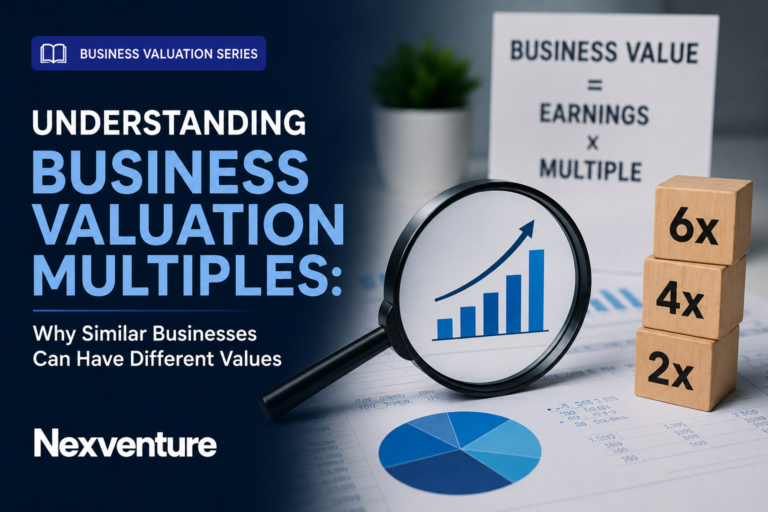
For many owner-operated businesses, an indicative valuation begins with seller’s discretionary earnings (SDE) multiplied by an appropriate multiple. SDE estimates the total financial benefit available to one working owner, using supportable adjustments. It is not interchangeable with EBITDA or net income.
Illustrative valuation formula
$200,000 SDE × 3.0 = $600,000 indicative value. The arithmetic is simple; verifying the earnings and selecting a defensible multiple is not.
Review the source of every add-back. If the owner performs work you cannot take over, a replacement employee or manager may be needed. That expense changes your economics even if the advertised SDE is technically supportable.
| Illustrative buyer adjustment | Annual amount |
|---|---|
| Advertised SDE | $200,000 |
| Required replacement manager | −$80,000 |
| Buyer-adjusted cash flow before other changes | $120,000 |
This is a hypothetical adjustment, not a universal rule. An owner-operator who can perform the seller’s role may face different costs from an absentee buyer.
Two Auto Shops: Same $200,000 Profit
Imagine two similarly sized auto-repair shops in the same market. Both report $200,000 in verified SDE, but Shop A asks $400,000 while Shop B asks $600,000. At first glance, Shop A looks like a bargain: the same earnings for $200,000 less.
| Metric | Shop A | Shop B |
|---|---|---|
| Advertised SDE | $200,000 | $200,000 |
| Asking price | $400,000 | $600,000 |
| Asking price / SDE | 2.0× | 3.0× |
All shop details and multiples are hypothetical illustrations, not observed market transactions or recommended market rates. Now examine what each buyer would actually inherit.
Will Earnings Survive the Owner Leaving?
In Shop A, customers ask for the owner, who prepares difficult quotes, resolves problems and manages employees. Much of the operational knowledge is undocumented. Shop B has a service manager, two long-tenured technicians and documented scheduling and quoting processes.
When I operated a travel agency, I had repeat customers who booked with me personally. If I had sold it, some might have remained, but others could have followed their existing relationships with other agents. Customer loyalty to an owner is not automatically transferable loyalty to the business.
This does not make Shop A unsellable. A skilled working buyer may be able to replace the owner. But the buyer needs to assess the role, training required, customer retention risk and transition support.
Buyer checkpoint
Who owns the customer relationships, who performs critical work, and what would break during the first 90 days without the seller?
Supplier Agreements and Lease Risk
Shop A enjoys favorable parts pricing through a personal supplier relationship, with no written commitment. Shop B has documented supplier pricing and payment terms. Both shops show the same current profit, but Shop A’s future margin is less certain.
Suppose, hypothetically, a company purchases $1 million of parts annually and benefits from a 5% price advantage. If that advantage disappears and the company cannot pass the cost along, annual earnings could decline by approximately $50,000. The risk is recurring, not merely a one-time inconvenience.
Now consider the premises. Shop A has 18 months left on its lease without a confirmed renewal option. Shop B has five years remaining and a renewal option. A location-dependent business may face rent increases, relocation costs or a refusal to renew. Buyers should verify assignment, change-of-control and renewal provisions rather than assume a lease automatically continues.
What to request
Written supplier contracts, change-of-control provisions, lease agreements, renewal options, landlord consent requirements and evidence that key terms will remain in force after closing.
Equipment, Inventory and Working Capital
Shop A has older lifts, diagnostic equipment and service vehicles. Shop B has recently replaced its essential equipment. If Shop A needs $100,000 of near-term equipment purchases, the lower asking price is not the whole story.
| Illustrative cash commitment | Shop A | Shop B |
|---|---|---|
| Asking price | $400,000 | $600,000 |
| Immediate equipment investment assumed | $100,000 | Minimal in this example |
| Price plus specified equipment | $500,000 | $600,000 plus any other required funding |
These are not complete all-in acquisition costs. The buyer must also determine whether inventory is included, whether sufficient working capital transfers, whether cash and receivables remain with the seller, and which liabilities or commitments are assumed.
- Is inventory included in the price or purchased separately at closing?
- What capital expenditures are likely over the next 12–36 months?
- How much cash is required to fund payroll, suppliers and operating expenses after closing?
- Which assets, receivables, deposits and liabilities actually transfer?
Why Deal Structure Matters
Shop A might require $400,000 cash at closing, with the seller leaving after two weeks. Shop B might ask $600,000 while offering partial seller financing, a longer transition and a performance-dependent payment component.
Shop B still costs more, but the structure may change immediate liquidity needs and how risk is allocated. Seller notes, earnouts and transition agreements also introduce their own terms and enforcement risks; none makes a weak business strong by itself.
Business translation
Price answers how much. Structure answers when you pay, how you pay, and who bears the risk if the expected performance does not materialize.
Are Earnings Sustainable?
Shop A’s hypothetical SDE rises from $120,000 to $150,000 to $200,000 over three years. That could be healthy growth—or an unusually strong final year. Shop B earns roughly $200,000 each year for three years, offering a more stable historical pattern, though no guarantee of future results.
Look beyond the headline trend. What caused growth? Are customers returning? Is revenue concentrated in a few accounts? Does the owner need to spend more time or marketing money to sustain it? Shop B’s service-reminder system and repeat customer base may make its earnings more predictable than Shop A’s owner-driven network.
Buyers are paying for a reasonable expectation of future earnings, not simply the right to admire last year’s results.
Side-by-Side Buyer Comparison
| Factor | Shop A | Shop B |
|---|---|---|
| Reported SDE | $200,000 | $200,000 |
| Asking price | $400,000 (2×) | $600,000 (3×) |
| Owner dependence | High | Lower; service manager in place |
| Processes | Partly undocumented | Documented |
| Supplier terms | Personal, unwritten | Written |
| Lease | 18 months; renewal uncertain | Five years plus option |
| Equipment | Near-term replacements | Recently upgraded |
| Earnings history | Rapid recent increase | Three years near $200,000 |
| Transition | More owner-dependent | More structured |
A buyer could reasonably prefer Shop B and accept a higher multiple for stronger transferability and less uncertainty. That does not establish that $600,000 is fair, or that $400,000 is cheap. Comparable sales, verified financials, local conditions, asset values and transaction terms still matter.
The Buyer’s Cash Flow Calculation
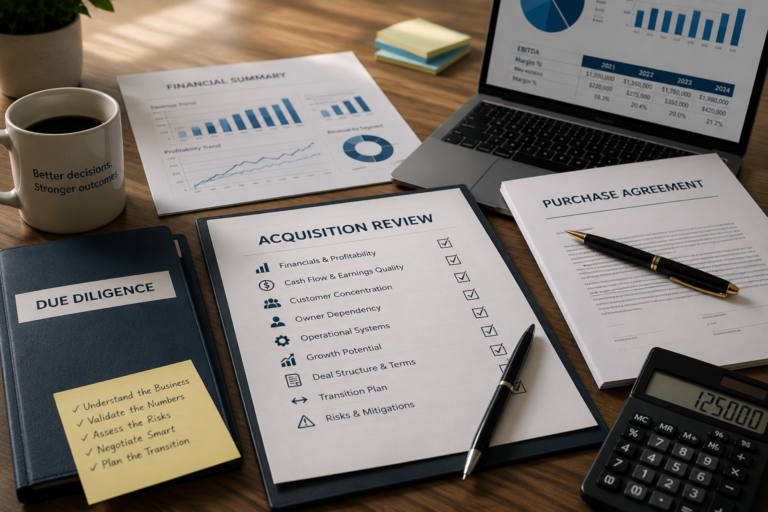
If I were buying, I would first normalize the verified earnings for how I intend to operate the business. Then I would estimate future operating expenses, recurring capital needs, financing payments and the cash required to close and sustain operations.
- Verify revenue, earnings and each SDE add-back against records.
- Adjust for replacement management, staffing and realistic rent or supplier changes.
- Budget equipment replacement, inventory and required working capital separately.
- Model acquisition debt service and the actual equity you must invest.
- Stress-test a weaker year, customer losses or an unexpected repair.
The number that matters
How much sustainable cash remains after the business is properly operated, necessary reinvestment is funded and acquisition debt is paid? It must reasonably compensate your work and investment while leaving room for setbacks.
Be careful not to mix one-time acquisition cash requirements with recurring annual expenses in a single subtraction. They affect the decision differently: one determines how much capital you need; the other determines what the business can continue to generate.
What Sellers Can Improve Before Listing
This comparison is useful for owners too. A business with clear records, repeatable operations and manageable transition risk is easier for buyers to understand and evaluate. That does not guarantee a higher sale price, but it can remove uncertainty that otherwise weakens offers.
- Document the numbers: reconcile financial statements, normalize earnings and support every add-back.
- Reduce key-person dependence: train staff, document procedures and transfer customer knowledge into systems.
- Secure critical terms: review leases, supplier agreements and change-of-control requirements before listing.
- Plan capital needs: disclose equipment condition and foreseeable investment instead of surprising buyers later.
- Prepare for handover: develop a realistic transition plan and identify which relationships require introductions.
Nexventure’s seller-focused tools are designed to help owners explore indicative valuation ranges, business risks and practical improvement opportunities before entering the market. They are decision-support tools, not a replacement for a qualified business valuator or transaction advisor.
The Price Is Only the Starting Point
Two businesses with identical profits can have different asking prices because their earnings may not be equally durable, transferable or economical for a new owner. Lease uncertainty, undocumented supplier terms, owner dependence, capital expenditures and deal structure can change the answer substantially.
A business priced at 2× SDE can still be expensive. One at 3× may offer better value. A higher-quality business can also be overpriced. The multiple is a starting point for investigation—not a verdict.
Final takeaway
Before comparing asking prices, compare the cash flow, risks and obligations you would actually inherit.
If you were evaluating these two shops, which would you investigate first: the earnings adjustments, the lease, upcoming equipment, or what is included in the purchase price?
Related Nexventure insights
Explore more practical guidance on assessing businesses and preparing for a sale:
TL;DR
In Brief
- Asking price is a seller’s request, not an independently established valuation.
- Compare SDE with SDE, not SDE with EBITDA or net income; verify add-backs.
- Two hypothetical auto shops each earn $200,000 SDE but ask $400,000 and $600,000.
- Owner dependence, lease terms, supplier contracts and recurring customers influence transferability.
- Equipment, inventory, working capital and debt service change the true acquisition economics.
- Deal structure can redistribute risk without making an inflated price reasonable.
- Base the decision on sustainable buyer cash flow and a realistic downside scenario.
Frequently Asked Questions
Why can two businesses with the same profit have different valuations?
Because profit alone does not describe future earnings risk, owner dependence, customer retention, asset condition, lease terms, required reinvestment or transferability. Those factors can influence a buyer’s expected cash flow and appropriate valuation multiple.
Is a business with a lower earnings multiple always cheaper?
No. A lower asking-price multiple can mask weaker earnings quality, major equipment purchases, additional staffing costs or other risks. Compare the total cash commitment and sustainable cash flow.
What is SDE in small-business valuation?
Seller’s discretionary earnings is a measure intended to estimate the total financial benefit available to one working owner after supportable adjustments. It differs from EBITDA and net income, so comparisons must use consistent definitions.
How does owner dependence affect business value?
When customers, supplier terms or critical operations depend heavily on the seller, earnings may be harder to maintain after a sale. A buyer may need a longer transition, replacement staff or a lower price to account for that risk.
Does a longer lease always make a business more valuable?
Not automatically. A longer lease may improve location certainty, but rent, assignment rights, renewal terms and other obligations must also be favorable and enforceable.
What is the difference between asking price and business valuation?
Asking price is the amount requested by the seller. A valuation is an estimate supported by an analysis of financial performance, risk, assets, market evidence and relevant assumptions. A completed transaction price can differ from both.
Should I subtract debt payments from SDE?
For your personal acquisition cash-flow analysis, model expected financing payments separately after estimating operating cash flow and required reinvestment. Do not confuse this buyer-specific affordability test with a standard business valuation measure.
How can a seller prepare for a stronger valuation?
Maintain reliable records, document processes, reduce dependence on the owner, clarify lease and supplier agreements, and identify future capital needs. These steps can make the business easier to evaluate and transfer.
Understand what buyers may see in your business.
Nexventure helps business owners explore valuation, business risks, buyer perspectives and practical opportunities to improve their business.
Explore NexventureEducational content only. All shop scenarios, multiples and calculations are hypothetical, not market benchmarks or professional valuation advice. Actual outcomes depend on verified financials, local conditions and transaction terms. Consult qualified valuation, legal, accounting and transaction professionals. Read our full disclaimer.