The Hidden Factors That Increase Business Value Before a Sale
Most owners focus on revenue and profit when thinking about valuation. Buyers look deeper. The businesses that attract stronger offers usually create confidence, reduce risk, and feel easier to take over.

Most business owners start thinking about valuation in a very normal way.
They look at revenue. They look at profit. They think about how long they have been in business, how many customers they have served, how much effort they have put in, and what the business has meant to their family over the years.
And honestly, that makes sense.
If you have spent ten, fifteen, or twenty years building something, it is very hard to see it only as a set of numbers. There is emotion in it. There is history. There are late nights, difficult employees, loyal customers, slow months, good years, stressful decisions, and probably a few moments where you wondered why you started the business in the first place.
So when the time comes to think about selling, retiring, transitioning, or simply understanding what the business might be worth, the first question usually sounds like this:
“How much is my business worth?”
That question sounds simple. But in real life, the answer is rarely simple.
A business valuation is not only about last year’s profit. It is not only about revenue. It is not only about applying a valuation multiple and calling it done.
Buyers look deeper than that.
They want to know what happens after the owner leaves. They want to know if customers will stay. They want to know if the team can operate without constant direction. They want to know whether the financials are clean, whether the business is transferable, and whether the risk feels manageable.
This is where many owners get surprised.
Sometimes the business is profitable, but buyers still feel nervous. Sometimes the numbers look fine, but the business feels hard to take over. And sometimes an owner expects a strong valuation, but the market responds with hesitation.
Not because the business is bad.
But because buyers are not just buying the past. They are buying confidence in the future.
That confidence is often built through hidden factors most owners do not fully notice until they start preparing for a sale.
Let’s look at this in a practical way, the way a serious buyer or advisor would quietly evaluate it.
Buyers Pay for Confidence, Not Just Profit
Profit matters. Of course it does.
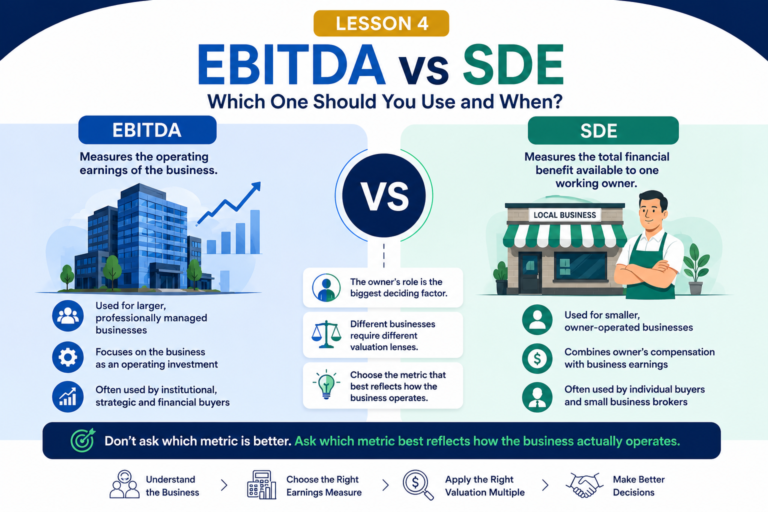
In most small business valuation conversations, profit is the starting point. Buyers, advisors, lenders, and valuation professionals often look at SDE, EBITDA, owner benefit, adjusted earnings, cash flow quality, and other financial measures to understand earning power.
But profit is only the beginning.
The real question buyers ask is more uncomfortable:
“Will this profit continue after I buy the business?”
That question changes everything.
Two businesses can both show $300,000 in annual seller discretionary earnings. One may receive strong buyer interest. The other may sit on the market for months.
Why?
Because buyers are not only evaluating earnings. They are evaluating the reliability of those earnings.
A buyer may look at your business and quietly ask:
- How much of this profit depends on the current owner?
- Are the customer relationships transferable?
- Are the financial statements believable?
- Are there systems behind the operation?
- Is this business stable, or does it only work because the owner is constantly holding it together?
This is why buyer confidence can directly affect valuation.
When confidence is high, buyers may be willing to pay a stronger valuation multiple, accept cleaner deal terms, and move faster through due diligence.
When confidence is low, buyers usually become cautious. They ask for seller financing. They negotiate harder. They delay decisions. They may reduce the offer or walk away entirely.
I have seen this happen more often than people realize. The business was not weak. The issue was that the buyer could not clearly understand the risk.
This is one of the reasons modern business valuation software and business intelligence platforms should look beyond numbers alone. A useful business valuation tool should help owners understand risk signals, transferability, buyer confidence, and operational readiness.
Transferable Systems Quietly Increase Business Value
A business that is easy to transfer is usually more attractive than a business that only works inside the owner’s head.
This sounds obvious when you read it. But in small business operations, it is extremely common for critical knowledge to stay informal.
The owner knows how pricing works.
The owner knows which customers need special handling.
The owner knows which suppliers can be trusted.
The owner knows how to solve the awkward problems that never show up in a manual.
That knowledge has value. But if it cannot be transferred, buyers may treat it as risk.
What buyers really like to see is operational maturity. Not perfection. Just enough structure to believe the business can keep running after the sale.
Strong transferable systems may include:
- Documented standard operating procedures
- Clear customer onboarding steps
- Defined employee roles
- Repeatable sales processes
- Organized supplier relationships
- Written pricing methods
- CRM or job management systems
- Consistent reporting habits
None of this has to be fancy.
In fact, overly complicated systems can create their own problems. Buyers usually want clarity, not complexity.
I have seen businesses with simple but well-documented processes feel much more valuable than larger businesses where everything depended on memory, habit, and constant owner involvement.
A business with systems feels less fragile.
And less fragile usually means more transferable.
Transferability is one of those hidden value drivers that does not always appear directly in a business valuation calculator, but it can strongly influence the buyer’s perception of risk.
Reducing Owner Dependency Can Change the Entire Valuation Conversation
Owner dependency is one of the biggest hidden risks in small business acquisitions.
It is also one of the most emotional ones.
Many owners are proud of being deeply involved. And they should be. Their involvement is often the reason the business survived and grew.
They built the relationships. They solved the problems. They made the hard calls. They carried the stress.
But when it comes time to sell a business, the buyer sees that involvement differently.
The buyer may think:
“If the owner leaves, what exactly am I buying?”
That is a difficult question, but it is a fair one.
A business that depends heavily on the owner usually feels riskier. Buyers worry about customer retention, employee confidence, operational continuity, and whether revenue will drop after transition.
This does not mean the owner has done anything wrong.
It simply means the business needs to become less dependent on one person before the sale.
Practical ways to reduce owner dependency include:
- Training a second-in-command or operations lead
- Moving customer relationships from personal to company-level relationships
- Delegating pricing, scheduling, service delivery, or sales responsibilities
- Documenting recurring decisions
- Introducing team accountability before the sale process begins
- Creating a realistic transition plan for the future buyer
What I usually tell owners is this:
You do not need to disappear from the business overnight. That would be unrealistic. But you do need to prove the business can stand on its own legs.
Buyers do not expect small businesses to operate like large corporations. But they do want to see that the business will not collapse the moment the owner steps back.
Reducing owner dependency can improve buyer confidence, strengthen negotiation leverage, and support a stronger valuation multiple.
It can also make the business less stressful to own before it ever sells.
Clean Financials Build Trust Faster Than Almost Anything Else
Financial organization may not sound exciting.
But during a sale, it matters a lot.
A buyer may like the business, the industry, the customer base, and the growth story. But if the financials are messy, doubt enters the room very quickly.
And once doubt enters, it is hard to remove.
Clean financials help buyers understand what the business actually earns. They make it easier to assess SDE, EBITDA, add-backs, owner compensation, discretionary expenses, debt, inventory, margins, working capital needs, and true cash flow.
This is especially important for businesses in the $100,000 to $5 million range, where personal and business expenses are sometimes mixed together.
A buyer does not expect every small business to have public-company financial reporting. But they do expect the numbers to make sense.
If the owner says the business makes $250,000, the buyer wants to see how that number was calculated.
Is it net profit?
Is it adjusted earnings?
Is it seller discretionary earnings?
Are add-backs reasonable?
Are there one-time expenses?
Are margins stable?
Are there unusual swings in the profit and loss statement?
These questions are normal. They are not attacks. Serious buyers ask them because they are trying to understand risk.
Clean financials can make due diligence smoother. They can reduce unnecessary negotiation pressure. They can also help an owner feel more prepared and less defensive during the sale process.
Recurring Revenue Makes the Future Easier to Believe
Buyers love predictability.
Not because they lack ambition. But because buying a business already comes with enough uncertainty.
Recurring revenue reduces some of that uncertainty.
This could mean subscriptions, maintenance contracts, service agreements, memberships, retainers, long-term clients, repeat ordering patterns, or renewal-based revenue.
Not every business can create a true subscription model. And honestly, not every business should try.
But almost every business can think more seriously about repeatability.
A buyer will usually ask:
- How often do customers come back?
- How predictable is future revenue?
- What percentage of sales comes from repeat customers?
- Are there contracts or only informal relationships?
- Is revenue seasonal, project-based, or stable?
A business with predictable revenue often feels safer than a business that has to restart from zero every month.
This can influence valuation.
In some industries, recurring revenue may support a higher valuation multiple because the buyer can forecast cash flow with more confidence.
For digital businesses, SaaS companies, subscription services, membership models, and some professional service firms, recurring revenue can be a major value driver.
For traditional local businesses, repeat customer behavior still matters. Even without formal contracts, strong retention can improve buyer confidence.
The deeper point is simple.
Buyers pay more attention when future revenue feels visible.
Customer Concentration Can Quietly Reduce Value
Customer concentration is one of those risks that can hide inside a profitable business.
On the surface, everything may look strong.
Revenue is good. Profit is good. The business has a loyal customer base.
But then a buyer discovers that one customer represents 40% or 50% of total revenue.
Suddenly the conversation changes.
The buyer starts thinking about downside risk.
What happens if that customer leaves?
Is the relationship with the business or with the owner personally?
Is there a contract?
How replaceable is that revenue?
This does not mean a business with customer concentration cannot sell. Many do.
But concentration often affects buyer confidence, deal structure, and negotiation leverage.
A buyer may ask for seller financing, an earnout, a longer transition period, or a lower upfront price to offset the risk.
Reducing customer concentration takes time. That is why early preparation matters.
Owners can improve this gradually by expanding the customer base, strengthening marketing channels, building referral systems, developing new segments, and making key relationships less dependent on the owner personally.
Goodwill, Reputation, and Brand Trust Can Be Real Assets
Some value is hard to measure, but very real.
Goodwill is one of those areas.
In a small business, goodwill may come from reputation, customer trust, location, brand recognition, local relationships, online reviews, referral history, supplier confidence, employee loyalty, and the general feeling people have about the company.
Buyers may not always describe it perfectly. But they feel it.
A business with strong goodwill often has lower customer acquisition friction. People already trust it. They refer others. They come back. They believe the company will deliver.
That kind of trust takes years to build.
And yes, it can influence business value.
But goodwill needs to be transferable.
If all goodwill is attached only to the current owner, buyers may discount it. If goodwill is attached to the business brand, team, systems, customer experience, and market reputation, buyers usually feel more confident.
This is where online presence can also matter.
Reviews, search visibility, website quality, social proof, customer testimonials, and brand clarity can support the buyer’s belief that the business has a healthy market position.
It does not mean every business needs to become a media brand.
But buyers do look at signals.
If a business has no reviews, poor digital presence, unclear positioning, and inconsistent customer communication, it may raise questions.
If the business has a strong reputation and visible customer trust, that can become part of the valuation story.
A practical reflection
Selling a business is not only a financial decision.
For many owners, it is emotional.
The business may represent decades of work. It may have paid for the family home, children’s education, vacations, emergencies, and retirement savings. It may also carry memories that do not fit neatly into a spreadsheet.
So when a buyer starts asking hard questions, it can feel personal.
Why are they questioning the financials?
Why are they worried about customer concentration?
Why do they keep asking what happens after the owner leaves?
Usually, they are not trying to disrespect the owner’s work.
They are trying to understand what risk they are inheriting.
That perspective shift is important.
A seller sees the past effort. A buyer sees the future risk.
The strongest sale preparation bridges that gap.
It helps the owner tell a clearer story. It helps the buyer feel calmer. And it gives both sides a better foundation for a fair conversation.
In my experience, owners who prepare early often feel more in control. Not because everything becomes perfect. But because fewer things feel surprising.
That matters.
Especially when the business is connected to retirement, legacy, family, identity, and the next chapter of life.
Growth Quality Matters More Than Growth Speed
Growth always sounds good.
But buyers do not only ask whether the business is growing. They ask how it is growing.
There is a big difference between healthy growth and stressful growth.
Healthy growth is profitable, repeatable, and supported by systems.
Stressful growth may depend on discounting, overworked staff, owner exhaustion, weak margins, or one large customer.
A business can grow revenue while becoming less attractive.
That surprises some owners.
But buyers care about the quality of earnings. They want to know whether growth is sustainable after the acquisition.
A steady business growing 8% per year with strong margins, good retention, clean systems, and low owner dependency may feel more valuable than a faster-growing business that looks chaotic behind the scenes.
This is why a thoughtful small business valuation should not only look at the growth number. It should look at the story behind the growth.
Where is growth coming from?
Is it profitable?
Can it continue?
Does it improve the business or stretch it too thin?
Sometimes slowing down and strengthening the foundation can create more sale value than chasing every possible revenue opportunity.
Lease, Location, Assets, and Deal Structure Can Also Affect Value
Some value drivers are industry-specific.
For a retail, restaurant, clinic, salon, daycare, or local service business, lease terms can matter a lot.
A strong location with a transferable lease may improve buyer confidence. A short lease, uncertain renewal, or difficult landlord situation may create concern.
For asset-heavy businesses, equipment condition, fleet age, inventory quality, maintenance history, and replacement costs can influence how buyers think about value.
For property-heavy businesses, buyers may also look at real estate value, NOI, cap rate expectations, location quality, and whether the property is included in the transaction or separated from the operating business.
This is why valuation for small business owners cannot be one-size-fits-all.
A business valuation Canada discussion may involve different tax, financing, and market expectations than a business valuation USA discussion. But the underlying buyer psychology is often similar across North America.
Buyers want clarity.
They want to know what is included.
They want to understand what risks transfer with the business.
They want to know whether the deal structure makes sense.
Sometimes the operating business is strong, but the lease creates uncertainty. Sometimes the asset base supports value. Sometimes obsolete equipment creates hidden future costs.
These details may not be exciting, but they often matter during acquisition due diligence.
Related Nexventure insights
If you are preparing for a possible sale, these related Nexventure resources may help you think through value, buyer perception, and readiness from different angles.
Bringing it all together
Increasing business value before a sale is not always about chasing more revenue.
Sometimes it is about making the business easier to trust.
Easier to understand.
Easier to transfer.
Easier to operate after the owner leaves.
Revenue, profit, and valuation multiples matter. They always will. But the hidden factors behind the numbers often decide how buyers feel about the opportunity.
A buyer may pay more for a business that feels stable, organized, and ready for transition.
They may hesitate when a business feels messy, dependent, unclear, or difficult to take over.
This is why seller readiness matters.
Not because every business needs to be perfect before it sells.
None are.
But the more prepared a business is, the more options the owner usually has.
And when it comes to selling a business, options matter.
They affect timing. They affect negotiation leverage. They affect buyer confidence. They affect how calm or stressful the process feels.
If you are thinking about selling in the next few years, preparation is not pressure. It is protection.
It gives you time to improve the business before a buyer starts judging it.
TLDR: If you remember nothing else, remember this:
- Buyers do not only pay for profit. They pay for confidence in future earnings.
- Transferable systems can increase business value by reducing buyer risk.
- High owner dependency often lowers buyer confidence and negotiation leverage.
- Clean financials help buyers trust the valuation story faster.
- Recurring revenue and repeat customers make future cash flow easier to believe.
- Customer concentration can quietly reduce value, even in a profitable business.
- Goodwill, reputation, and brand trust matter more when they are transferable.
- Preparing one to three years before a sale usually creates more options later.
FAQ
What increases business value the most before selling?
Profit is important, but the biggest value improvements often come from reducing risk. Clean financials, lower owner dependency, strong systems, recurring revenue, customer diversification, and transferable goodwill can all improve buyer confidence.
How early should I prepare my business for sale?
Ideally, one to three years before you plan to sell. Some improvements, like documenting systems or reducing owner dependency, take time. Early preparation usually gives you more control and better options.
Does higher revenue always mean a higher valuation?
Not always. Buyers look at the quality of revenue, not just the size. Stable, profitable, repeatable revenue often carries more value than unpredictable revenue that depends heavily on the owner or a few customers.
Why do buyers care so much about owner dependency?
Buyers want to know the business can continue after the current owner leaves. If customers, staff, operations, and sales all depend on one person, buyers may see more risk and negotiate harder.
Can a business valuation calculator show these hidden factors?
A basic business valuation calculator may focus mostly on revenue, profit, and valuation multiples. A stronger business valuation tool should also consider buyer confidence, risk signals, transferability, seller readiness, and operational quality.
Is this relevant for both Canadian and US business owners?
Yes. Market practices, tax rules, and financing expectations can differ between Canada and the United States, but buyer psychology is often similar. Buyers in both markets care about risk, transferability, financial clarity, and future cash flow.
Get a clearer valuation starting point with Nexventure.
Nexventure helps you understand valuation range, buyer confidence, risk signals, and improvement opportunities before your next move. Getting prepared early usually creates more options later.
Start Free Valuation